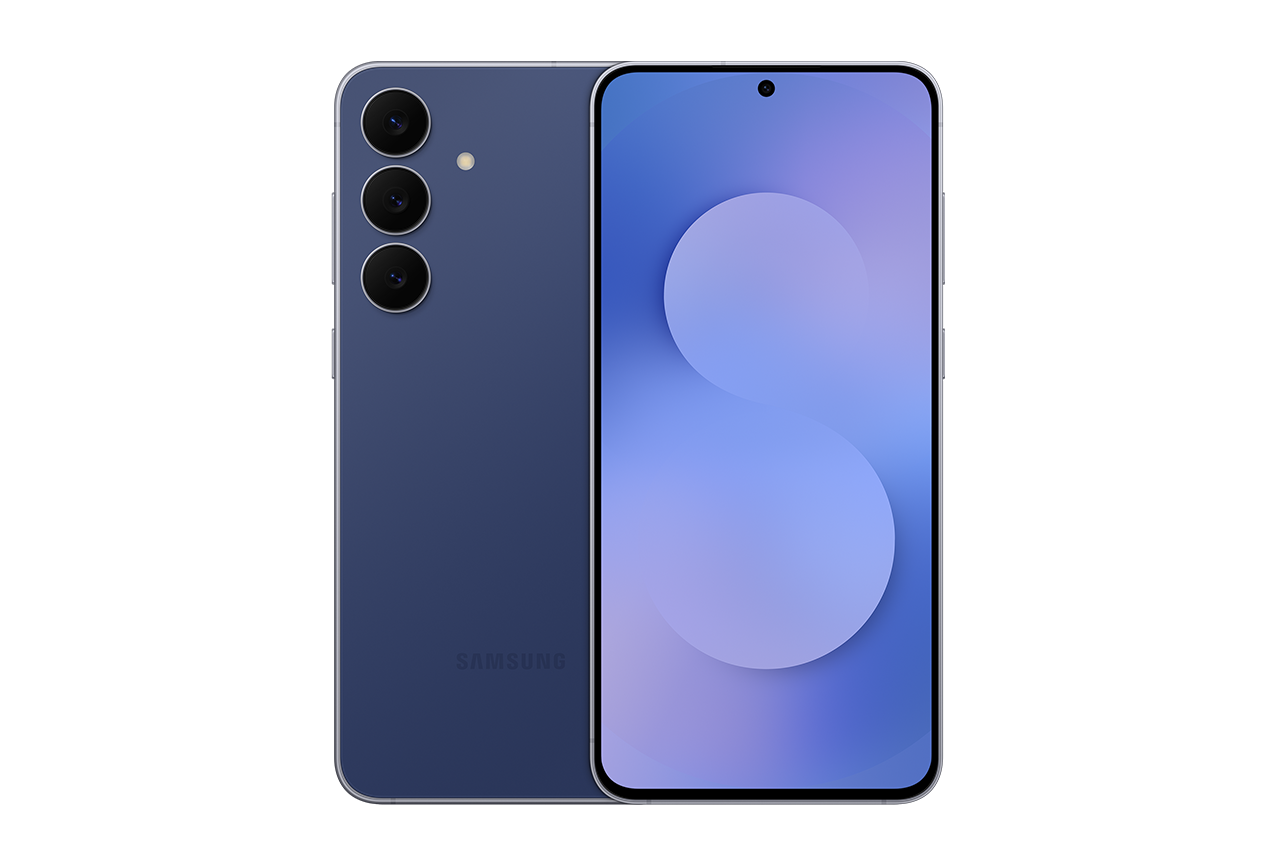
We put the Samsung Galaxy S25 FE through our rigorous DXOMARK Display test suite to measure its performance across four criteria. In this test results, we will break down how it fared in a variety of tests and several common use cases.
Overview
Key display specifications
- 6.7 inches AMOLED (~90.2% screen-to-body ratio)
- Dimensions: 161.3 x 76.6 x 7.4 mm (6.35 x 3.02 x 0.29 inches)
- Resolution: 1080 x 2340 pixels, (~385 ppi density)
- Aspect ratio: None
- Refresh rate: 120 Hz
Scoring
Sub-scores and attributes included in the calculations of the global score.
 Samsung Galaxy S25 FE

156
display
151
Samsung Galaxy S24 Ultra
Best: Samsung Galaxy S24 Ultra (164)
161
Google Pixel 10
Best: Google Pixel 10 (167)
164
Samsung Galaxy S25 Ultra
Best: Samsung Galaxy S25 Ultra (167)
141
Google Pixel 7 Pro
Best: Google Pixel 7 Pro (164)
Eye Comfort Label & Attributes
<10%
Flicker perception probability
% of population
1.56
Minimum Brightness
in nits
0.56
Circadian Action Factor
99%
Color
Consistency
vs Display-P3 color space
Position in Global Ranking

10
th
1. Google Pixel 10 Pro XL
161
2. Samsung Galaxy S25 Ultra
160
4. Samsung Galaxy S25 Edge
158
10. Google Pixel 10 Pro Fold
156
10. Samsung Galaxy S25 FE
156
13. Samsung Galaxy Z Fold7
155
13. Samsung Galaxy Z Flip7
155
13. Samsung Galaxy S24 Ultra
155
17. Samsung Galaxy Z Fold6
154
17. Samsung Galaxy S24+ (Exynos)
154
17. Samsung Galaxy S24 (Exynos)
154
24. Google Pixel 9 Pro Fold
152
26. Apple iPhone 17 Pro Max
151
26. Apple iPhone 15 Pro Max
151
34. Apple iPhone 16 Pro Max
150
34. Samsung Galaxy Z Flip7 FE
150
34. Samsung Galaxy Z Flip6
150
44. Samsung Galaxy S23 Ultra
148
50. Samsung Galaxy A55 5G
147
53. Apple iPhone 14 Pro Max
146
55. Samsung Galaxy S24 FE
145
59. Samsung Galaxy Z Flip5
144
62. Asus Zenfone 11 Ultra
143
62. Samsung Galaxy A35 5G
143
67. Apple iPhone 13 Pro Max
142
67. Samsung Galaxy Z Fold5
142
73. Samsung Galaxy S23 FE
140
78. Xiaomi Redmi Note 14 Pro+ 5G
139
79. Honor Magic4 Ultimate
138
90. Samsung Galaxy S22 Ultra (Snapdragon)
135
90. Xiaomi Redmi Note 13 Pro Plus 5G
135
95. Samsung Galaxy S22+ (Exynos)
134
98. Samsung Galaxy Z Flip4
133
98. Samsung Galaxy S22 Ultra (Exynos)
133
98. Samsung Galaxy S22 (Snapdragon)
133
98. Vivo X80 Pro (MediaTek)
133
103. Samsung Galaxy S22 (Exynos)
132
108. Samsung Galaxy S21 Ultra 5G (Exynos)
131
108. Vivo X80 Pro (Snapdragon)
131
112. Apple iPhone 13 mini
130
112. Samsung Galaxy Z Fold4
130
112. Samsung Galaxy S21 Ultra 5G (Snapdragon)
130
112. Samsung Galaxy S21 FE 5G (Snapdragon)
130
123. Samsung Galaxy A54 5G
129
127. Apple iPhone 12 Pro Max
127
131. Vivo X60 Pro 5G (Snapdragon)
126
148. Motorola Edge 30 Pro
123
152. Apple iPhone 11 Pro Max
122
152. Motorola Edge 40 Pro
122
156. Apple iPhone SE (2022)
120
162. Samsung Galaxy A52 5G
114
164. Motorola Razr 40 Ultra
113
167. Crosscall Stellar-X5
109
168. Samsung Galaxy A53 5G
108
172. Crosscall Stellar-M6
101
175. Samsung Galaxy A22 5G
82
Position in Premium Ranking
2
nd
4. Samsung Galaxy S24 (Exynos)
154
16. Samsung Galaxy S22 (Snapdragon)
133
17. Samsung Galaxy S22 (Exynos)
132
19. Samsung Galaxy S21 FE 5G (Snapdragon)
130
25. Vivo X60 Pro 5G (Snapdragon)
126
Pros
- Excellent overall video experience.
- Colors are pleasant and accurate in natural mode.
- Touch is fast and accurate.
Cons
- Brightness is high in lowlight and dark environment.
- Unwanted touches when using the device with one hand are frequent.
The Samsung Galaxy S25 FE strengthens its display profile with improved color accuracy, better uniformity, and more stable viewing-angle behavior, offering a smoother and more coherent visual experience overall. Although its peak brightness remains behind the flagship tier, the device maintains reliable calibration and consistent performance across most real-world conditions.
In Natural Mode, the Samsung Galaxy S25 FE provides accurate, well-balanced colors with restrained saturation, ensuring faithful rendering for both multimedia and everyday use.
Peak luminance is lower than that of the flagship S25 models in High Brightness Mode, which can slightly hinder readability in strong sunlight. Still, brightness transitions are fluid, and outdoor visibility remains acceptable.
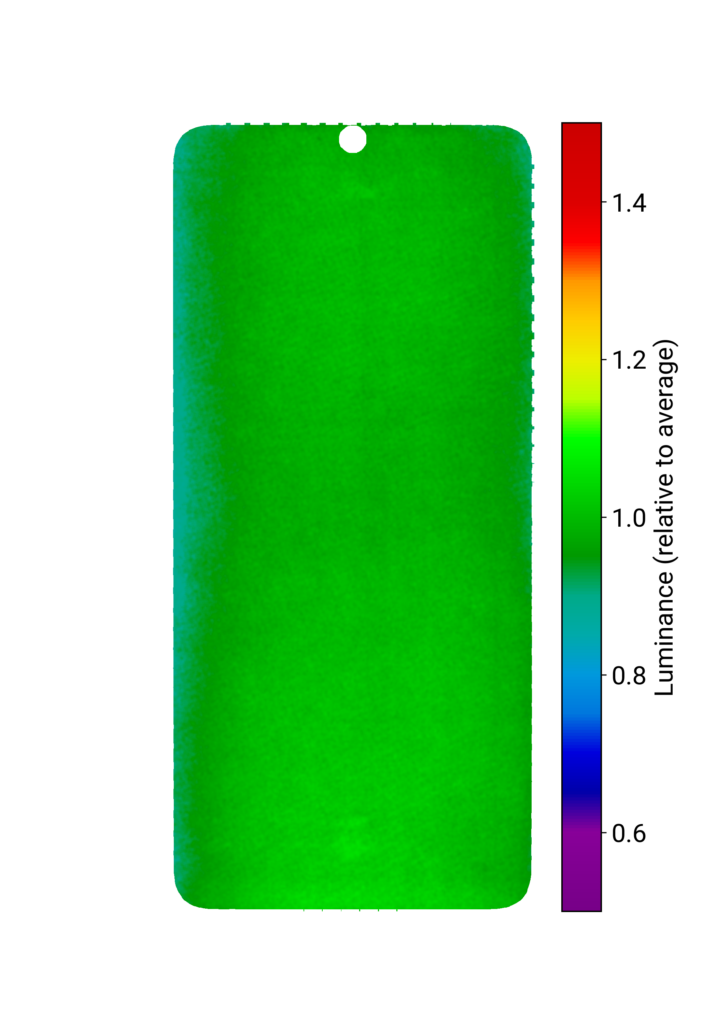
Uniformity and viewing-angle handling show the clearest generational gains: the panel exhibits fewer brightness inconsistencies, and color shifts are better controlled when tilted, delivering a more stable and cohesive image.
Beyond these improvements, the device offers an excellent video experience, pleasant color reproduction in Natural Mode, and fast, accurate touch response. However, brightness tends to be high in low-light environments, and unwanted touches occur frequently during one-handed use.
The Galaxy S25 FE also earns the Eye Comfort Label, providing effective blue-light reduction while maintaining natural and accurate color reproduction, ensuring a viewing experience that is both eye-friendly and visually faithful.
Test summary
About DXOMARK Display tests: For scoring and analysis, a device undergoes a series of objective and perceptual tests in controlled lab and real-life conditions. The DXOMARK Display score takes into account the overall user experience the screen provides, considering the hardware capacity and the software tuning. In testing, only factory-installed video and photo apps are used. More in-depth details about how DXOMARK tests displays are available in the article “A closer look at DXOMARK Display testing.”
The following section focuses on the key elements of our exhaustive tests and analyses performed in DXOMARK laboratories. Full reports with detailed performance evaluations are available upon request. To order a copy, please contact us.
Readability
151
Samsung Galaxy S24 Ultra
Samsung Galaxy S24 Ultra
How Display Readability score is composed
Readability evaluates the user’s ease and comfort of viewing still content, such as photos or a web page, on the display under different lighting conditions. Our measurements run in the labs are completed by perceptual testing and analysis.
Luminance under various lighting conditions
This graph shows the screen luminance in environments that range from total darkness to outdoor conditions. In our labs, the indoor environment (250 lux to 830 lux) simulates the artificial and natural lighting conditions commonly seen in homes (with medium diffusion); the outdoor environment (from 20,000 lux) replicates a situation with highly diffused light.
Contrast under various lighting conditions
This graph shows the screen’s contrast levels in lighting environments that range from total darkness to outdoor conditions. In our labs, the indoor environment (250 lux to 830 lux) simulates the artificial and natural lighting conditions commonly seen in homes (with medium diffusion); the outdoor environment (from 20,000 lux) replicates a situation with highly diffused light.
Photo EOTF
The Electro-Optical Transfer Function (EOTF) defines how bits are converted into luminance out of the display. Gray levels (horizontal axis) represent the different shades from pure white (100% gray level) to pitch black (0% gray level). The standard for still images follows a 2.2 gamma. The flatter the curves, the harder it is to perceive differences between consecutive shades. This phenomenon is more frequent under intensive lighting conditions (20,000 lux) in the low gray level regions.
Photo EOTF
The Electro-Optical Transfer Function (EOTF) defines how bits are converted into luminance out of the display. Gray levels (horizontal axis) represent the different shades from pure white (100% gray level) to pitch black (0% gray level). The standard for still images follows a 2.2 gamma. The flatter the curves, the harder it is to perceive differences between consecutive shades. This phenomenon is more frequent under intensive lighting conditions (20,000 lux) in the low gray level regions.
Photo EOTF
The Electro-Optical Transfer Function (EOTF) defines how bits are converted into luminance out of the display. Gray levels (horizontal axis) represent the different shades from pure white (100% gray level) to pitch black (0% gray level). The standard for still images follows a 2.2 gamma. The flatter the curves, the harder it is to perceive differences between consecutive shades. This phenomenon is more frequent under intensive lighting conditions (20,000 lux) in the low gray level regions.
Luminance vs Viewing Angle
This graph presents how the luminance drops as viewing angles increase.
Average Reflectance (SCI) Samsung Galaxy S25 FE
Samsung Galaxy S25 FE
Google Pixel 10
Honor 400
SCI stands for Specular Component Included, which measures both the diffuse reflection and the specular reflection. Reflection from a simple glass sheet is around 4%, while it reaches about 6% for a plastic sheet. Although smartphones’ first surface is made of glass, their total reflection (without coating) is usually around 5% due to multiple reflections created by the complex optical stack.
Average reflectance is computed based on the spectral reflectance in the visible spectrum range (see graph below) and human spectral sensitivity.
Reflectance (SCI)
Wavelength (horizontal axis) defines light color, but also our capacity to see it; for example, UV is a very low wavelength that the human eye cannot see; Infrared is a high wavelength that the human eye also cannot see). White light is composed of all wavelengths between 400 nm and 700 nm, i.e. the range the human eye can see. Measurements above show the reflection of the devices within the visible spectrum range (400 nm to 700 nm).
Uniformity
This graph shows the distribution of luminance throughout the entire display panel. Uniformity is measured with a 20% gray pattern, with bright green indicating ideal luminance. An evenly spread-out bright green color on the screen indicates that the display’s brightness is uniform. Other colors indicate a loss of uniformity.
PWM Frequency Samsung Galaxy S25 FE
480 Hz
Bad
Good
Bad
Great
Samsung Galaxy S25 FE
Google Pixel 10
Honor 400
Pulse width modulation is a modulation technique that generates variable-width pulses to represent the amplitude of an analog input signal. This measurement is important for comfort because flickering at low frequencies can be perceived by some individuals, and in the most extreme cases, can induce seizures. Some experiments show that discomfort can appear at a higher frequency. A high PWM frequency (>1500 Hz) tends to be less disturbing for users.
Temporal Light Modulation
This graph represents the frequencies of lighting variation; the highest peak gives the most important modulation. The combination of a low frequency and a high peak is susceptible to inducing eye fatigue.
Color
161
Google Pixel 10
Google Pixel 10
How Display Color score is composed
Color evaluations are performed in different lighting conditions to see how well the device manages color with the surrounding environment. Devices are tested with sRGB and Display-P3 image patterns. Both faithful mode and default mode are used for our evaluation. Our measurements run in the labs are completed by perceptual testing & analysis.
White point color under D65 illuminant at 830 lux
This graph shows the white point coordinates for the image pattern using the default or the faithful mode. D65 illuminant (6500 Kelvin) is a standard that defines the color of white at midday; it is used for display calibration as a white reference, therefore devices are expected to be at or close to the D65 white point.
Color fidelity
Each arrow represents the color difference between a target color pattern (base of the arrow) and its actual measurement (tip of the arrow). The longer the arrow, the more visible the color difference is. If the arrow stays within the circle, the color difference will be visible only to trained eyes. The tested color mode is the most faithful proposed by each device, and a color correction is applied to account for the different white points of each device.
White color shift with angle
This graph shows the color shift when the screen is at an angle. Each dot represents a measurement at a particular angle. Dots inside the inner circle exhibit no color shift in angle; those between the inner and outer circle have shifts that only trained experts will see; but those falling outside the outer circle are noticeable.
Circadian Action Factor Samsung Galaxy S25 FE
Samsung Galaxy S25 FE
Google Pixel 10
Honor 400
The circadian action factor is a metric that defines how light impacts the human sleep cycle. It is the ratio of the light energy contributing to sleep disturbances (centered around 450 nm, representing blue light) over the light energy contributing to our perception (covering 400 nm to 700 nm and centered on 550 nm, which is green light). A high circadian action factor means that the ambient light contains strong blue-light energy and is likely to affect the body’s sleep cycle, while a low circadian action factor implies the light has weak blue-light energy and is less likely to affect sleeping patterns.
Spectrum of white emission with Night mode ON
Spectrum measurements of a white web page with BLF mode on and off. This graph shows the impact of blue light filtering on the whole spectrum. All other settings used are default, in particular, the luminance level follows the auto-brightness adaptation from the manufacturer.
The wavelength (horizontal axis) defines light color but also the capacity to see it. For example, UV, which has a very low wavelength, and infra-red, which has a high wavelength, are both not visible to the human eye. White light is composed of all wavelengths between 400 nm and 700 nm, which is the range visible to the human eye.
Spectrum of white emission with Night mode OFF
Spectrum measurements of a white web page with BLF mode on and off. This graph shows the impact of blue light filtering on the whole spectrum. All other settings used are default, in particular, the luminance level follows the auto-brightness adaptation from the manufacturer.
The wavelength (horizontal axis) defines light color but also the capacity to see it. For example, UV, which has a very low wavelength, and infra-red, which has a high wavelength, are both not visible to the human eye. White light is composed of all wavelengths between 400 nm and 700 nm, which is the range visible to the human eye.
Video
164
Samsung Galaxy S25 Ultra
Samsung Galaxy S25 Ultra
How Display Video score is composed
The video attribute evaluates the Standard Dynamic Range (SDR) and High Dynamic Range (HDR10) video handling in indoor and low-light conditions . Our measurements run in the labs are completed by perceptual testing and analysis.
Video peak luminance vs Lighting conditions
This bar chart presents the peak luminance measured for SDR and HDR10 content on a 10% window white pattern.
Video peak luminance vs Lighting conditions
This bar chart presents the peak luminance measured for SDR and HDR10 content on a 10% window white pattern.
SDR video EOTF curve
These curves represent the SDR video tone distribution for white color.
The Electro-Optical Transfer Function (EOTF) defines how bits are converted into luminance out of the display. Gray levels (horizontal axis) represent the different shades from pure white (100% gray level) to pitch black (0% gray level). The standard for SDR videos follows a 2.2 gamma. The flatter the curves, the harder it is to perceive differences between consecutive shades. This phenomenon is more frequent under bright lighting conditions (830 lux) in the low gray levels region (< 30%).
SDR video EOTF curve
These curves represent the SDR video tone distribution for white color.
The Electro-Optical Transfer Function (EOTF) defines how bits are converted into luminance out of the display. Gray levels (horizontal axis) represent the different shades from pure white (100% gray level) to pitch black (0% gray level). The standard for SDR videos follows a 2.2 gamma. The flatter the curves, the harder it is to perceive differences between consecutive shades. This phenomenon is more frequent under bright lighting conditions (830 lux) in the low gray levels region (< 30%).
HDR10 video EOTF curve
These curves represent the HDR10 video tone distribution for white color.
The Electro-Optical Transfer Function (EOTF) defines how bits are converted into luminance out of the display. Gray levels (horizontal axis) represent the different shades from pure white (100% gray level) to pitch black (0% gray level). While the PQ (Perceptual Quantizer) standard is reminded here for reference, it cannot be a target for smartphones as it is an absolute standard whereas smartphones adapt their brightness to lighting conditions. The flatter the curves, the harder it is to perceive differences between consecutive shades. This phenomenon is more frequent under bright lighting conditions (830 lux) in the low gray levels region (< 30%).
HDR10 video EOTF curve
These curves represent the HDR10 video tone distribution for white color.
The Electro-Optical Transfer Function (EOTF) defines how bits are converted into luminance out of the display. Gray levels (horizontal axis) represent the different shades from pure white (100% gray level) to pitch black (0% gray level). While the PQ (Perceptual Quantizer) standard is reminded here for reference, it cannot be a target for smartphones as it is an absolute standard whereas smartphones adapt their brightness to lighting conditions. The flatter the curves, the harder it is to perceive differences between consecutive shades. This phenomenon is more frequent under bright lighting conditions (830 lux) in the low gray levels region (< 30%).
Gamut coverage for video content under 0 lux environment
The primary colors are measured both in HDR10 and SDR. The solid color gamut measures the extent of the color area that the device can render in total darkness. The dotted line represents the content’s artistic intent. The measured gamut should match the master color space of each video.
Gamut coverage for video content under 830 lux environment
The primary colors are measured both in HDR10 and SDR. The solid color gamut measures the extent of the color area that the device can render in total darkness. The dotted line represents the content’s artistic intent. The measured gamut should match the master color space of each video.
SDR Video Frame Drops FHD at 30 fps
Samsung Galaxy S25 FE
Google Pixel 10
Honor 400
HDR Video Frame Drops UHD at 30 fps
Samsung Galaxy S25 FE
Google Pixel 10
Honor 400
These gauges present the percentage of frame irregularities in a 30-second video. These irregularities are not necessarily perceived by users (unless they are all located at the same time stamp) but are an indicator of performance.
Touch
141
Google Pixel 7 Pro
Google Pixel 7 Pro
How Display Touch score is composed
We evaluate the touch attributes under many types of contents where touch is key, and requires different behaviors such as gaming (quick touch to response time), web (smooth scrolling of the page) and images (accurate and smooth navigation from one image to another).
Average Touch Response Time Samsung Galaxy S25 FE
Samsung Galaxy S25 FE
Google Pixel 10
Honor 400
Touch To Display response time
This response time test precisely evaluates the time elapsed between a single touch of the robot on the screen and the displayed action. This test is applied to activities that require high reactivity, such as gaming.

 English
 Camera