We put the Samsung Galaxy S25 FE through our rigorous DXOMARK Camera test suite to measure its performance in photo, video, and zoom quality from an end-user perspective. This article breaks down how the device fared in a variety of tests and several common use cases and is intended to highlight the most important results of our testing with an extract of the captured data.
Overview
Key camera specifications:
- Primary: 50 MP, f/1.8, 24mm (wide), 1/1.57″, 1.0µm, dual pixel PDAF, OIS
- Ultra-wide: 12 MP, f/2.2, 13mm, 123˚ (ultrawide), 1/3.0″, 1.12µm
- Tele: 8 MP, f/2.4, 75mm (telephoto), 1/4.4″, 1.0µm, PDAF, OIS, 3x optical zoom
Scoring
Sub-scores and attributes included in the calculations of the global score.
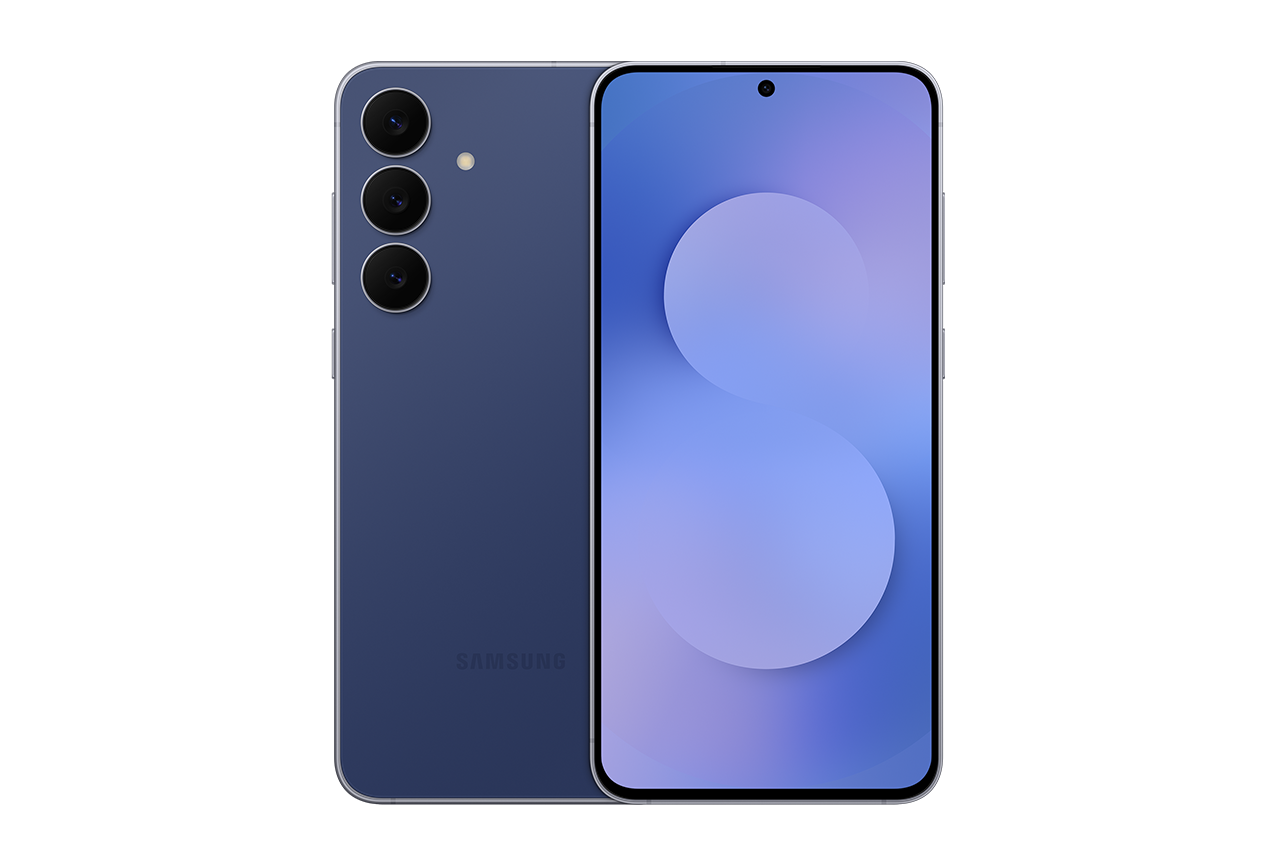 Samsung Galaxy S25 FE

118
camera
133
Huawei Pura 80 Ultra
Best: Huawei Pura 80 Ultra (184)
150
Oppo Find X9 Ultra
Best: Oppo Find X9 Ultra (185)
143
Vivo X300 Ultra
Best: Vivo X300 Ultra (175)
112
Oppo Find X9 Ultra
Best: Oppo Find X9 Ultra (173)
125
Apple iPhone 17 Pro
Best: Apple iPhone 17 Pro (186)
14
Motorola Signature
Best: Motorola Signature (151)
41
Vivo X200 Ultra
Best: Vivo X200 Ultra (140)
Use cases & Conditions
Use case scores indicate the product performance in specific situations. They are not included in the overall score calculations.
Portrait
Portrait photos of either one person or a group of people
Outdoor
Photos & videos shot in bright light conditions (≥1000 lux)
Indoor
Photos & videos shot in good lighting conditions (≥100lux)
Lowlight
Photos & videos shot in low lighting conditions (<100 lux)
Zoom
Photos and videos captured using zoom (more than 1x)
Pros
-
Target exposure is often accurate in photo.
-
Color rendering is often pleasant with accurate white balance in photo.
-
Level of details is good in bright conditions in photo and Video.
-
Dynamic range is pretty extended in Video
Cons
-
Target exposure is often slightly underexposed especially in HDR conditions for Video
-
White balance is often pink with desaturated colors in Video
-
Noise can be visible even in bright conditions in photo and video
-
Level of details is low while using bokeh mode
-
Residual motion can be visible in motion or static videos in Video
-
Some artifacts are visible such as hue shift, flare and fusion artifacts in photo.
The Samsung Galaxy S25 FE is the fan edition of the S25 series. Unlike its flagship counterpart, which is powered by a Snapdragon chipset, the FE version relies on the Exynos 2400. While the main camera module is largely unchanged from the S25, the telephoto module has a slightly lower resolution (8 MP vs. 10 MP), and the ultra-wide module appears less capable in terms of overall performance.
In terms of image quality, the S25 FE ranks lower in our database. Still photos generally show good quality, but results can be inconsistent, particularly for color rendering and exposure. Bokeh mode struggles to retain fine detail and can appear soft in low-light conditions. The ultra-wide camera captures solid images, but it does not support 4K 60 fps video recording. The telephoto module also underperforms, with noticeable loss of detail in indoor and low-light scenarios.
Video performance falls behind many competitors. Footage is often slightly pinkish and underexposed, and overall detail retention is limited, particularly in challenging lighting conditions.
Test summary
About DXOMARK Camera tests: DXOMARK’s camera evaluations take place in laboratories and real-world situations using a wide variety of use-cases. The scores rely on objective tests for which the results are calculated directly using measurement software in our laboratory setups, and on perceptual tests where a sophisticated set of metrics allow a panel of image experts to compare aspects of image quality that require human judgment. Testing a smartphone involves a team of engineers and technicians for about a week. Photo and Video quality are scored separately and then combined into an overall score for comparison among the cameras in different devices. For more information about the DXOMARK Camera protocol, click here. More details on smartphone camera scores are available here. The following section gathers key elements of DXOMARK’s exhaustive tests and analyses. Full performance evaluations are available upon request. Please contact us on how to receive a full report.
Samsung Galaxy S25 FE Camera Scores
This graph compares DXOMARK photo and video scores between the tested device and references. Average and maximum scores of the price segment are also indicated. Average and maximum scores for each price segment are computed based on the DXOMARK database of devices tested.
Photo
130
Huawei Pura 80 Ultra
Huawei Pura 80 Ultra
About DXOMARK Camera Photo tests
For scoring and analysis, DXOMARK engineers capture and evaluate more than 3,800 test images in controlled lab environments as well as outdoor, indoor and low-light natural scenes, using the camera’s default settings. The photo protocol is designed to take into account the main use cases and is based on typical shooting scenarios, such as portraits, landscape and zoom photography. The evaluation is performed by visually inspecting images against a reference of natural scenes, and by running objective measurements on images of charts captured in the lab under different lighting conditions from 0.1 to 10,000+ lux and color temperatures from 2,300K to 6,500K.
133
Huawei Pura 80 Ultra
Huawei Pura 80 Ultra
Samsung Galaxy S25 FE Photo scores
The photo Main tests analyze image quality attributes such as exposure, color, texture, and noise in various light conditions. Autofocus performances and the presence of artifacts on all images captured in controlled lab conditions and in real-life images are also evaluated. All these attributes have a significant impact on the final quality of the images captured with the tested device and can help to understand the camera's main strengths and weaknesses at 1x.
Samsung Galaxy S25 FE – Accurate target exposure, pleasant color rendering on SDR scenes
Autofocus irregularity and speed: 1000Lux Δ0EV Daylight Handheld
This graph illustrates focus accuracy and speed as well as zero shutter lag capability by showing the edge acutance versus the shooting time measured on the AFHDR setup on a series of pictures. All pictures were taken in one light condition and indicated illuminant, 500ms after the defocus. The edge acutance is measured on the four edges of the Dead Leaves chart, and the shooting time is measured on the LED Universal Timer.
117
Oppo Find X9 Ultra
Oppo Find X9 Ultra
DXOMARK CHART (DMC) detail preservation score vs lux levels for handheld conditions
This graph shows the evolution of the DMC detail preservation score with the level of lux, for two holding conditions. DMC detail preservation score is derived from an AI-based metric trained to evaluate texture and details rendering on a selection of crops of our DXOMARK chart.
Visual noise evolution with illuminance levels in handheld condition
This graph shows the evolution of visual noise metric with the level of lux in handheld condition. The visual noise metric is the mean of visual noise measurement on all patches of the Dead Leaves chart in the AFHDR setup. DXOMARK visual noise measurement is derived from ISO15739 standard.
112
Oppo Find X9 Ultra
Oppo Find X9 Ultra
All image quality attributes are evaluated at focal lengths from approximately 40 mm to 300 mm, with particular attention paid to texture and detail. The score is derived from a number of objective measurements in the lab and perceptual analysis of real-life images.
Samsung Galaxy S25 FE Telephoto Scores
This graph illustrates the relative scores for the different zoom ranges evaluated. The abscissa is expressed in 35mm equivalent focal length.
DXOMARK CHART (DMC) detail preservation score per focal length
This graph shows the evolution of the DMC detail preservation score with respect to the full-frame equivalent focal length for different light conditions. The x-axis represents the equivalent focal length measured for each corresponding shooting distance and the y-axis represents the maximum details preservation metric score: higher value means better quality. Large dots correspond to zoom ratio available in the user interface of the camera application.
DXOMARK CHART (DMC) detail preservation score per focal length
This graph shows the evolution of the DMC detail preservation score with respect to the full-frame equivalent focal length for different light conditions. The x-axis represents the equivalent focal length measured for each corresponding shooting distance and the y-axis represents the maximum details preservation metric score: higher value means better quality. Large dots correspond to zoom ratio available in the user interface of the camera application.
DXOMARK CHART (DMC) detail preservation score per focal length
This graph shows the evolution of the DMC detail preservation score with respect to the full-frame equivalent focal length for different light conditions. The x-axis represents the equivalent focal length measured for each corresponding shooting distance and the y-axis represents the maximum details preservation metric score: higher value means better quality. Large dots correspond to zoom ratio available in the user interface of the camera application.
DXOMARK CHART (DMC) detail preservation score per focal length
This graph shows the evolution of the DMC detail preservation score with respect to the full-frame equivalent focal length for different light conditions. The x-axis represents the equivalent focal length measured for each corresponding shooting distance and the y-axis represents the maximum details preservation metric score: higher value means better quality. Large dots correspond to zoom ratio available in the user interface of the camera application.
143
Vivo X300 Ultra
Vivo X300 Ultra
These tests analyze the performance of the ultra-wide camera at several focal lengths from 12 mm to 20 mm. All image quality attributes are evaluated, with particular attention paid to such artifacts as chromatic aberrations, lens softness, and distortion. Pictures below are an extract of tested scenes.
Samsung Galaxy S25 FE Ultra-Wide Scores
This graph illustrates the relative scores for the different zoom ranges evaluated. The abscissa is expressed in 35mm equivalent focal length.
DXOMARK CHART (DMC) detail preservation score per focal length
This graph shows the evolution of the DMC detail preservation score with respect to the full-frame equivalent focal length for different light conditions. The x-axis represents the equivalent focal length measured for each corresponding shooting distance and the y-axis represents the maximum details preservation metric score: higher value means better quality. Large dots correspond to zoom ratio available in the user interface of the camera application.
DXOMARK CHART (DMC) detail preservation score per focal length
This graph shows the evolution of the DMC detail preservation score with respect to the full-frame equivalent focal length for different light conditions. The x-axis represents the equivalent focal length measured for each corresponding shooting distance and the y-axis represents the maximum details preservation metric score: higher value means better quality. Large dots correspond to zoom ratio available in the user interface of the camera application.
DXOMARK CHART (DMC) detail preservation score per focal length
This graph shows the evolution of the DMC detail preservation score with respect to the full-frame equivalent focal length for different light conditions. The x-axis represents the equivalent focal length measured for each corresponding shooting distance and the y-axis represents the maximum details preservation metric score: higher value means better quality. Large dots correspond to zoom ratio available in the user interface of the camera application.
DXOMARK CHART (DMC) detail preservation score per focal length
This graph shows the evolution of the DMC detail preservation score with respect to the full-frame equivalent focal length for different light conditions. The x-axis represents the equivalent focal length measured for each corresponding shooting distance and the y-axis represents the maximum details preservation metric score: higher value means better quality. Large dots correspond to zoom ratio available in the user interface of the camera application.
Video
98
Apple iPhone 17 Pro
Apple iPhone 17 Pro
About DXOMARK Camera Video tests
DXOMARK engineers capture and evaluate almost 3 hours of video in controlled lab environments and in natural low-light, indoor and outdoor scenes, using the camera’s default settings. The evaluation consists of visually inspecting natural videos taken in various conditions and running objective measurements on videos of charts recorded in the lab under different conditions from 0.1 to 10000+ lux and color temperatures from 2,300K to 6,500K.
125
Apple iPhone 17 Pro
Apple iPhone 17 Pro
Samsung Galaxy S25 FE Video scores
Video Main tests analyze the same image quality attributes as for still images, such as exposure, color, texture, or noise, in addition to temporal aspects such as speed, and smoothness and stability of exposure, white balance, and autofocus transitions.
Samsung Galaxy S25 FE – Slightly underexposed, pinkish white balance
Samsung Galaxy S25 Ultra – Good target exposure, pleasant white balance
DXOMARK CHART (DMC) detail preservation video score vs lux levels
This graph shows the evolution of the DMC detail preservation video score with the level of lux in video. DMC detail preservation score is derived from an AI-based metric trained to evaluate texture and details rendering on a selection of crops of our DXOMARK chart.
Spatial visual noise evolution with the illuminance level
This graph shows the evolution of spatial visual noise with the level of lux. Spatial visual noise is measured on the visual noise chart in the video noise setup. DXOMARK visual noise measurement is derived from ISO15739 standard.
Temporal visual noise evolution with the illuminance level
This graph shows the evolution of temporal visual noise with the level of lux. Temporal visual noise is measured on the visual noise chart in the video noise setup.

 English
 Display