
 English

Based on the findings of the DXOMARK Global Insights 2025 research project conducted across Paris, Shanghai, and Jeddah, DXOMARK convened an official roundtable with members of the DXOMARK Imaging Expert Committee. Together with DXOMARK image engineers, the experts explored core topics such as user preferences, skin tone rendering, and real-world usage scenarios, offering critical analysis of today’s consumer expectations.
The roundtable brought together imaging professionals from across the industry:
-
- Cem Kıvırcık – Senior Imaging Journalist and Photographer
- Marko Risovic – Documentary Photographer
- Renaud Labracherie – Senior Photojournalist
- Juanmao Tong – Senior Professional in Mobile Photography
- Gugugu – Digital Technology Content Creator
- Madder – Editor-in-Chief, Content Department, iRentals
- Hervé Macudzinski – Director of Image Science, DXOMARK
- Coraline Hillairet – Senior Image Engineer, DXOMARK
The Committee brings together global imaging experts, academic institutions, and industry partners through open collaboration and content co-creation, driving the development of next-generation imaging test standards and advancing the industry as a whole. Learn more about the Expert Committee
DXOMARK Global Insights 2025 – Is Imaging really “too many tastes to satisfy”
Research methodology
In addition to applying our typical Insights methodology (Learn more), for this specific study, a cross validation was conducted: images were captured across three regions and independently annotated by user groups from each location. This methodology enabled DXOMARK to compare regional preferences and assess whether a unified image quality tuning strategy could satisfy users worldwide.
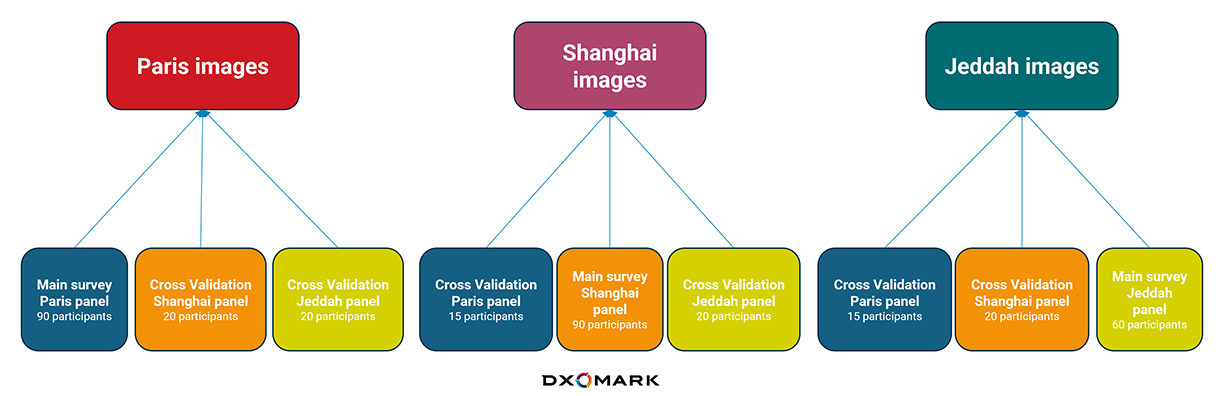
The study included flagships from major brands (vivo, Samsung, Huawei, Oppo, Xiaomi), one mid-range smartphone per region and a professional camera rendering
(Note that this study was conducted end of summer 2025, before the release of the most recent flagships).
Research findings
Research suggests that a single camera tuning scheme can satisfy consumers across different regions. In particular, the portrait performance of the vivo X200 series was widely appreciated by users in all three regions, demonstrating its ability to align with diverse aesthetic preferences.
Across all tested devices, the vivo series consistently ranked among the top performers in consumer evaluations across all three regions. Oppo Find X8 Ultra and Huawei Pura 80 Ultra secured second and third place respectively.

The DXOMARK Satisfaction Index is a numerical representation of user preferences. It is a combination of two distinct aspects that we measured in this study: One measures preference and the other measures rejection. By combining these two results, we were able to gather insights not only about user preferences but to quantify them as well.
In cross-evaluations between Shanghai and Paris, users in both locations showed a clear preference for portraits captured by vivo smartphones and photographer rendering, citing higher brightness and more pleasing skin tones.

For this example, both groups ranked vivo X200s and OPPO Find X8 Ultra among the top three for imaging quality. The Samsung Galaxy S25 Ultra was excluded due to unnatural skin tones in low-light conditions.
If You Love It, Will Others Feel the Same?
DXOMARK Insights
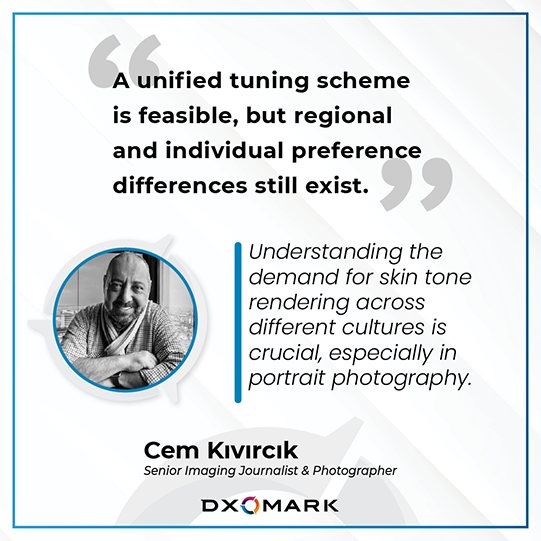
While a unified tuning approach is broadly feasible, regional and individual differences remain significant. In some cases, users in China and France expressed completely opposite preferences when evaluating the same images.
Research Findings

In the Shanghai study, the results highlighted regional differences in preferred rendering styles. Shanghai users showed a strong preference for the vivo X200S and photographer rendering, while Paris users favored vivo’s rendering. Despite these differing preferences, both panels reported comparable satisfaction index, with only minor variations observed across the two regions.

In the indoor use case, user preferences showed partial overlap: Paris users favored warmer color rendering while Shanghai users preferred less warm more neutral color rendering.
Real-World Portrait Photography : What Truly Matters to Users?
DXOMARK Insights
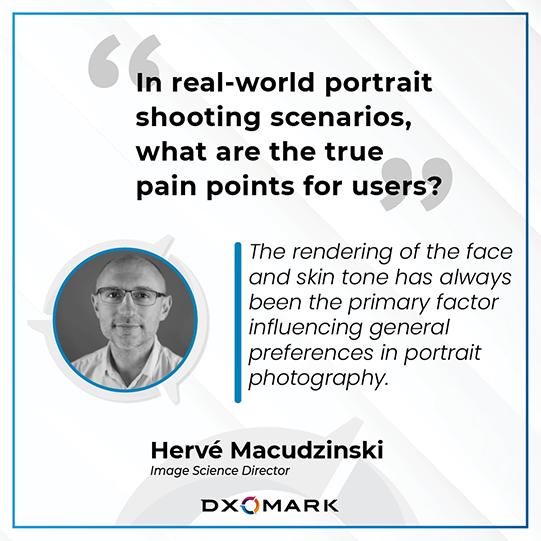
Despite rapid advances in smartphone imaging, user evaluation criteria in real-world scenarios remain remarkably consistent.
Research Findings
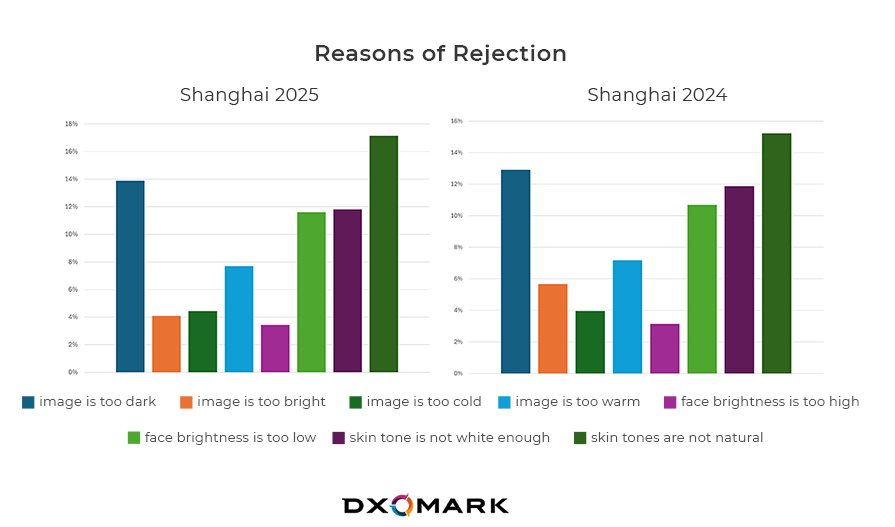
Comparing Shanghai surveys from 2024 and 2025 revealed nearly identical rejection reasons: images that were too dark, unnatural skin tones, insufficient facial brightness, or lack of skin fairness.
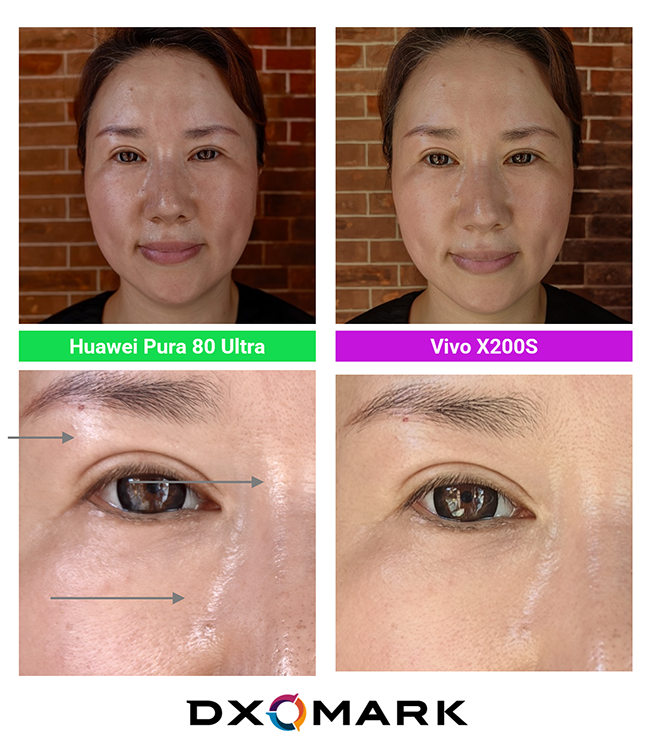
It is noteworthy that the satisfaction index for vivo devices increased in 2025, driven by changes in rendering that delivered softer facial contrast, more controlled peak brightness and reduced facial shine.
Roundtable Open Discussion Among the Expert Committee Members
In addition to exploring the findings of our global Insights studies, we opened the discussion for a debate on various topics related to smartphone imaging and user preferences. Here are some thoughts from our experts on these topics.
Common Failure Modes in Skin Tone Rendering
-
- Madder noted that strong backlighting can cause exposure flicker, while unsmooth zooming or camera switching in video often leads to white balance and sharpness issues that are especially noticeable to non-professional users.
- Gugugu described skin tone as a “memory color,” stressing that cameras must reproduce how users remember colors, not just objective values. He recommended improving multispectral recognition to better handle complex lighting.
- Marko Risovic pointed out that portrait prioritization can sometimes strip background environments of texture, urging manufacturers to better balance subject and surroundings.
Localization vs. Standardization
Cem Kıvırcık argued that while cultural expectations matter, manufacturers should always offer standard or natural modes:
“Excessive smoothing and brightening may satisfy some preferences, but they often undermine authenticity.”
The Role of Customization Tools
Customization tools were widely viewed as essential not to add filters, but to give users control over aggressive AI processing. As aesthetics evolve and self-expression becomes more important, such tools are expected to play an increasingly critical role in mobile imaging.
What Image Styles Do Users Want?
Experts agreed that users are increasingly drawn to authentic, true-to-life imagery. While vibrant, share-ready photos were once dominant, demand is growing for images that preserve natural textures especially in skin tones and environmental detail. Consistent color rendering across focal lengths and accurate reproduction of key colors remain top priorities.
Conclusion and Path Forward
This cross-regional research highlights strong common ground in consumer expectations, demonstrating that a unified camera tuning strategy can successfully address the needs of users across global markets. At the same time, regional preferences shaped by cultural context, aesthetic sensibilities, and individual taste continue to influence how imaging attributes are perceived.
Across all regions, accurate and pleasing face and skin-tone rendering consistently emerged as a universal priority, underscoring its central role in user satisfaction.
Building on these insights, DXOMARK will continue to convene regular roundtable discussions through the Imaging Experts Committee. Anchored in real consumer feedback, this global open-collaboration aims to meaningfully support the development of next-generation imaging evaluation standards and contribute to the ongoing evolution of the imaging industry.