
 English
 中文
中文
 Display
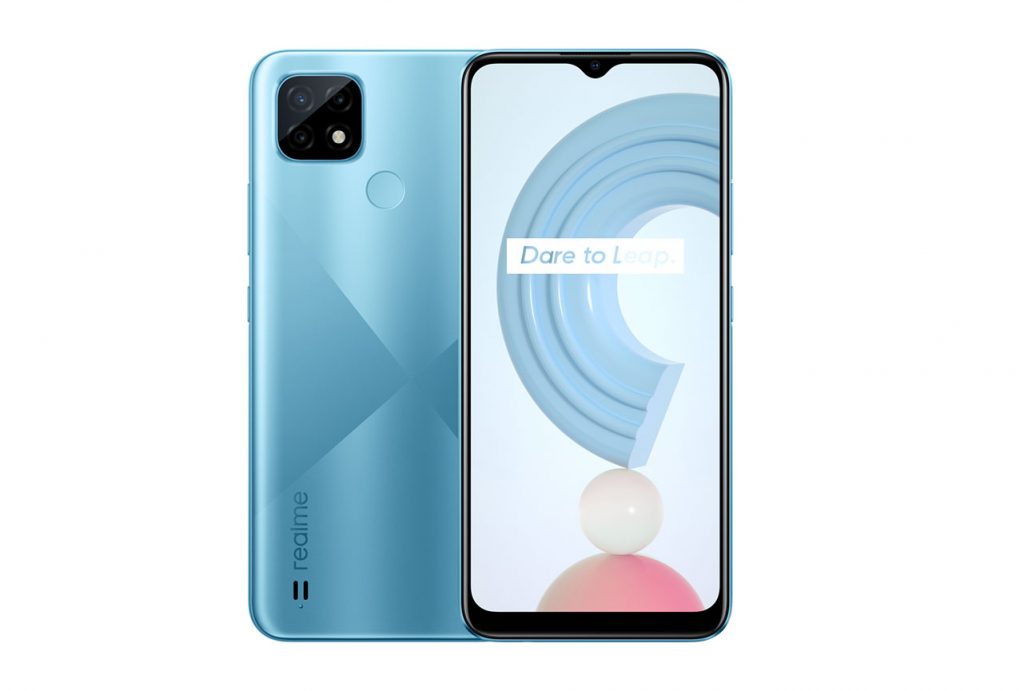
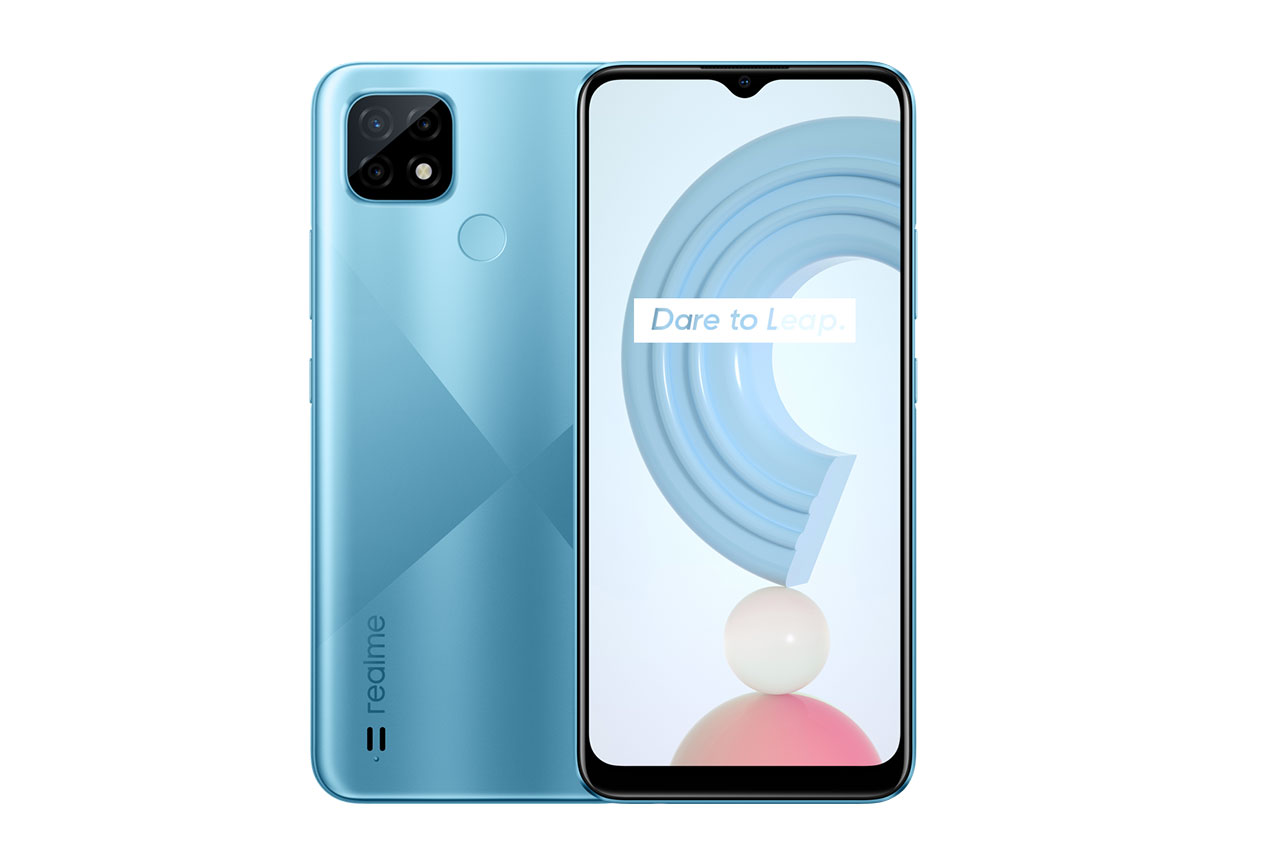
Appearing in June 2020, the Realme C21 lands in our Essential (under $200) segment and features a large-capacity 5000 mAh battery, which we have recently tested. Here are some of the key results.
Key specifications:
- Battery capacity: 5000 mAh
- 10W charger
- 6.5-inch, 720 x 1600, 60 Hz, IPS LCD display
- Mediatek Helio G35 (12 nm) chipset
- Tested ROM / RAM combination: 64 GB + 4 GB
About DXOMARK Battery tests: For scoring and analysis in our smartphone battery reviews, DXOMARK engineers perform a variety of objective tests over a week-long period both indoors and outdoors. This article highlights the most important results of our testing. (See our introductory and how we test articles for more details about our smartphone Battery protocol.)
Test summary
Scoring
Sub-scores and attributes included in the calculations of the global score.
Realme C21


Key performances
These key points are derived from the lab measurements during testing and do not figure into the overall score. The lab measurements, however, are used for the overall score.


 168th
17th
168th
17th
Pros
- Autonomy of more than two days (57 hours) with moderate use
- Low power drain when the phone is fully charged and unplugged
Cons
- Slow to charge with a 10W charger
- Poor charging efficiency
The Realme C21 put in a disappointing performance in all sub-scores for a device in its category, achieving just one small point more than the Realme C11, which comes with a different memory combination and slightly fewer pixels, but otherwise has the exact same OS, chipset, battery, and charger.
We compared the Realme C21’s performance in several key categories with three other Essential segment devices, the Wiko Power U20, the Vivo Y20s, and brand stablemate Realme C11; battery capacity, charger, display type and resolution, and processor specifications for all four devices are shown in the table below.
|
Realme C21 |
Wiko Power U20 | Vivo Y20s | Realme C11 | |
| Battery capacity (mAh) |
5000 |
6000 | 5000 | 5000 |
| Charger |
10W |
10W | 18 W |
10W |
|
Display type |
LCD | LCD | LCD |
LCD |
| Display resolution |
1600 x 720 |
1640 x 720 | 1600 x 720 |
1560 x 720 |
|
Chipset |
Helio G35 | Helio G35 | Snapdragon 460 |
Helio G35 |
Autonomy (64)
How long a battery charge lasts depends not only on battery capacity but also on other aspects of the phone’s hardware and software. The DXOMARK Battery autonomy score is composed of three performance sub-scores: (1) Stationary, (2) On the go, and (3) Calibrated use cases. Each sub-score comprises the results of a comprehensive range of tests for measuring autonomy in all kinds of real-life scenarios.


The Realme C21 posts below-average autonomy results for its price range, especially in our stationary and on the go tests.
Realme C21 reaches 57 hours of autonomy with moderate use, which is around 8 hours fewer than the average in its segment. Even though the Realme C21 has the same battery capacity as the Vivo Y20s, the Vivo supplies 12 hours more autonomy.
As for linearity, the last 20% of the C21’s battery indicator represents 17.6% of the capacity, meaning that the last several percentage points fall down a little bit more quickly than at other percentage levels.

Battery Life (moderate)
88th
Battery Life (moderate)
17th

Stationary
Realme C21
65
104
A robot housed in a Faraday cage performs a set of touch-based user actions during what we call our “typical usage scenario” (TUS) — making calls, video streaming, etc. — 4 hours of active use over the course of a 16-hour period, plus 8 hours of “sleep.” The robot repeats this set of actions every day until the device runs out of power.
The Realme C21 comes in an hour behind the C11 and behind its other competitors. It manages nighttime consumption correctly, averaging an overnight drop of less than 2%.

On the go
Realme C21
69
96
Using a smartphone on the go takes a toll on autonomy because of extra “hidden” demands, such as the continuous signaling associated with cellphone network selection, for example. DXOMARK Battery experts take the phone outside and perform a precisely defined set of activities while following the same three-hour travel itinerary for each device.
The Realme C21 did not live up to expectations for its segment, and is last among its rivals except for camera use, where its performance is just above average.

Calibrated
Realme C21
64
100
For this series of tests, the smartphone returns to the Faraday cage and our robots repeatedly perform actions linked to one specific use case (such as gaming, video streaming, etc.) at a time. Starting from an 80% charge, all devices are tested until they have expended at least 5% of their battery power.
The Realme C21 struggles to maintain decent autonomy when its screen is on, coming in below the competition for gaming and video uses. It puts in an average performance when its screen is off (idle mode, music streaming, calling). On a positive note, it does better than the Wiko Power U20 for calling and music streaming, even though the Wiko has a significantly bigger battery.
Charging (53)
The DXOMARK Battery charging score is composed of two sub-scores, Full charge and Quick boost. Full charge tests assess the reliability of the battery power gauge; measure how long it takes to charge a battery from zero to 80% capacity and from 80 to 100%; and measure how long and how much power the battery takes to go from an indicated 100% to an actual full charge. With the phone at different charge levels (20%, 40%, 60%, 80%), Quick boost tests measure the amount of charge the battery receives after being plugged in for 5 minutes.

Charging a 5000 mAh battery with a 10W charger inevitably equates to a sub-par experience, which unfortunately is still too common for devices in the Essentials segment. Coming with an 18W charger, only the Vivo Y20s shows better results in this comparison.
Full charge
Realme C21
54
121
As it supports only 10W, the Realme C21 suffers from very slow charging. Nevertheless, it can charge 80% of its battery in 1 hour 50 minutes and achieves 100% in 3 hours 07 minutes. (That it takes more than an hour to top off above 80% can be explained by the fact that the C21 charges at the maximum supported power from 0% to 80%, after which the charging speed slows down to preserve the battery.)

Charging Time 0-80%
197th
Charging Time 0-80%
16th

Quick boost
Realme C21
55
111
Both Realme devices and the Wiko Power U20 use 10W chargers, so once again the Vivo Y20s with its 18W charger handily beats them all, providing at least an hour more autonomy for a 5-minute charge at all stages.
| Realme C21 | Wiko Power U20 | Vivo Y20s | Realme C11 | ||
| Autonomy boost (hh:mm) | 20% | 1:25 | 1:23 | 2:45 | 1:24 |
| 40% | 1:27 | 1:25 | 2:36 | 1:24 | |
| 60% | 1:29 | 1:24 | 2:32 | 1:24 | |
| 80% | 1:20 | 1:19 | 1:45 | 1:22 | |
| Percentage boost | 20% | 3.7 % | 2.8 % | 5.5 % | 3.6 % |
| 40% | 3.7 % | 2.9 % | 5.2 % | 3.6 % | |
| 60% | 3.8 % | 2.8 % | 5.1 % | 3.6 % | |
| 80% | 3.4 % | 2.6 % | 3.5 % | 3.5 % | |
| Energy consumed | 20% | 1049 mWh | 1029 mWh | 1508 mWh | 990 mWh |
| 40% | 1063 mWh | 1045 mWh | 1425 mWh | 994 mWh | |
| 60% | 1087 mWh | 1033 mWh | 1387 mWh | 999 mWh | |
| 80% | 981 mWh | 971 mWh | 962 mWh | 971 mWh |
Efficiency (64)
The DXOMARK power efficiency score consists of two sub-scores, Charge up and Discharge rate, both of which combine data obtained during robot-based typical usage scenario testing, outdoor mobility testing, charging evaluation, and power measurements, and then take into consideration the device’s battery capacity.
Posting the same score as the C11, the Realme C21 is ahead for its Discharge efficiency, thanks mainly to its lower consumption when gaming, but it’s behind for Charge up and overall efficiency.

Charge up
Realme C21
55
105
The Realme C21s charge up efficiency is only 67%, which is significantly lower than the average in its segment, though it is comparable to the performances of its competitors in this review. The C21 showed good residual power draining when fully charged and when unplugged; its C11 sibling showed better overall charge efficiency and slightly lower residuals when plugged in (trickle charge).

Discharge
Realme C21
73
121
The Realme C21 has the same chipset as its C11 sibling and the Wiko device, and shows the same discharge currents in most use cases, with the exception of gaming, where the C11’s 2 GB RAM configuration had an adverse impact on its score.
As noted previously, the Realme C21 is very efficient compared to its rivals when its screen is off.
Conclusion
As with most devices in the Essentials segment, the Realme C21’s charging performance is hampered by a too-small charger. Although it comes in behind its Wiko and Vivo rivals in this review, the C21 manages to edge out its C11 sibling by a point, and shows decent autonomy (57 hours) with moderate use.
DXOMARK encourages its readers to share comments on the articles. To read or post comments, Disqus cookies are required. Change your Cookies Preferences and read more about our Comment Policy.