
 English

In our previous article, we looked at the evolution of smartphone zoom. In this benchmark, we turn our attention to smartphone telephoto add-ons and ask how much they can improve image quality when shooting distant subjects.
Dedicated add-ons offer a different approach to long-range smartphone photography. Instead of relying only on the phone’s built-in zoom cameras and digital zoom, they add extra optical reach. But can this really bring smartphone photos closer to what you would get from a professional camera?
To find out, we compared the Oppo Find X9 Ultra and vivo X300 Ultra to the Sony RX100 VII and Sony Alpha 6700 on default mode. We had an additional comparison with the Sony Alpha 6700 shot in RAW and then edited by a professional photographer. The comparison covers focal lengths from 24mm to 600mm where the smartphone add-ons
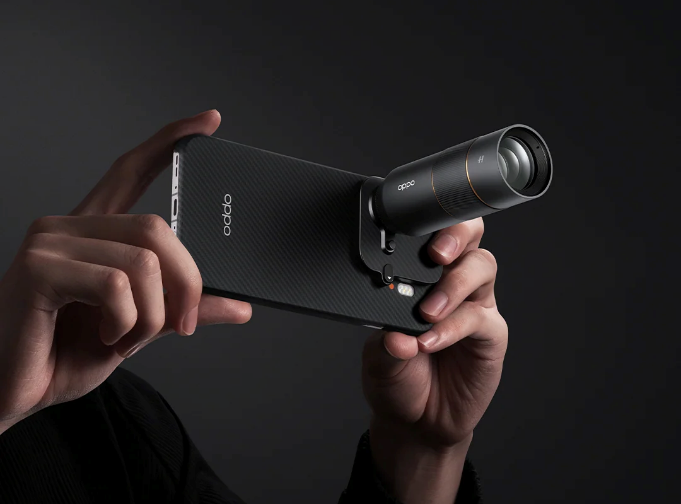
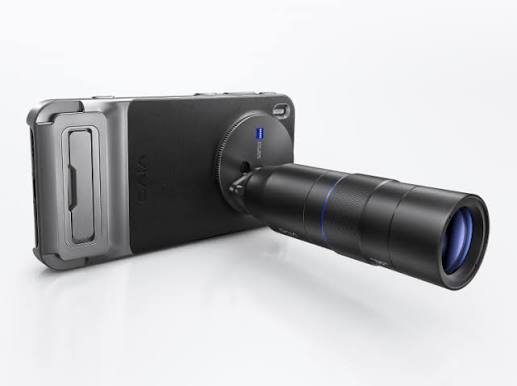
Devices and focal ranges
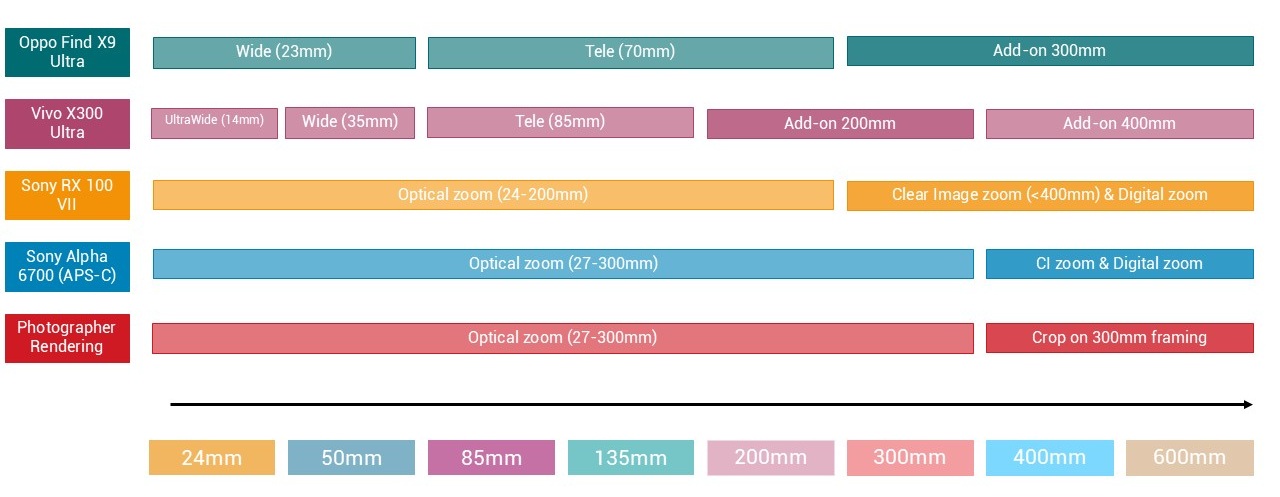
Each device was tested using the camera setup available at each focal length, taking into account how each system handles long-range shooting.
The Oppo Find X9 Ultra was tested without an add-on at the shorter telephoto ranges, then with its 300mm add-on at longer focal lengths. The vivo X300 Ultra was tested without an add-on at shorter ranges, with its 200mm add-on at 200mm and 300mm, and with its 400mm add-on at 400mm and 500mm.
The Sony RX100 VII uses optical zoom up to 200mm, followed by Clear Image Zoom, which provides up to 2× magnification before switching to digital zoom. The Sony Alpha 6700 uses an optical zoom lens up to 300mm. Beyond 300mm, the 400mm and 500mm views are created by cropping the 300mm image. The photographer’s edited photos use the same Alpha 6700 images as the professional-camera reference.
Edited and unedited images
The comparison includes different types of image output. The Sony RX100 VII and Sony Alpha 6700 were shot in automatic mode, using unedited SDR JPEGs without additional noise reduction. Smartphone images were processed automatically by their camera systems.
In contrast, the Alpha 6700 RAW images were professionally edited in Photoshop, allowing adjustments to exposure, color, noise, and texture. This distinction is important: the unedited JPEGs represent the cameras’ direct output, while the edited images illustrate the potential of professional post-processing.
Scenes and lighting conditions
The benchmark combines real-world photo tests with laboratory measurements.
The real-world evaluation covers outdoor, indoor, low-light, and night scenes. The laboratory scenes were captured under lighting conditions ranging from 1000 lux outdoors to 5 lux in low light.
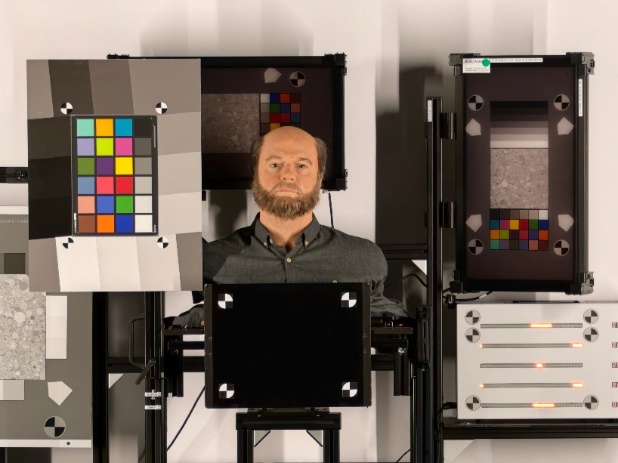
The laboratory evaluation uses an All-in-One Portrait setup with a realistic . Four HDR and four SDR conditions were tested, with 10 shots per condition. The laboratory tests cover 135mm, 200mm, 300mm, 400mm, and 500mm, in addition to shorter focal lengths outside the scope of this article.
At 500mm, physical constraints in the laboratory required part of the setup to be cropped. Noise and color were therefore not evaluated at this focal length.
Image quality was assessed using both measurements and visual analysis, looking at exposure, dynamic range, color, detail, noise, and autofocus. The user experience was evaluated separately, including zoom continuity, preview quality, stabilization, and focusing.

Telephoto performance across focal lengths
Range – 135mm
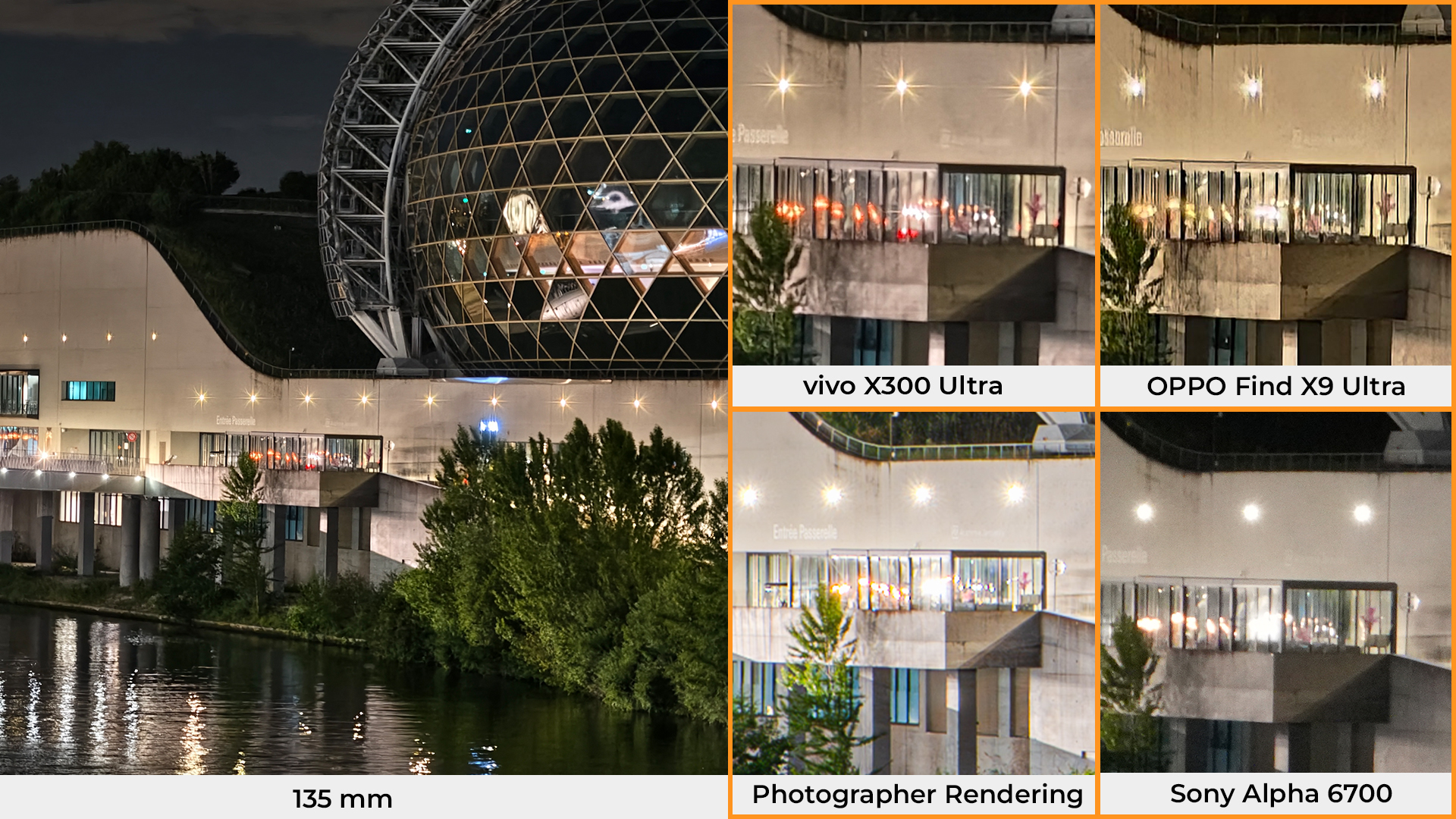
At 135mm, the photographer’s edited photo offers the best overall balance of detail, exposure, and natural-looking results. Both Oppo and vivo are already competitive, especially when it comes to keeping fine details visible. Outdoors, vivo captures a high level of detail with good exposure, although its colors can sometimes look slightly cool. Oppo also captures good detail and generally accurate exposure, although some color shifts can appear.
Indoor scenes show a similar pattern. Vivo keeps a high level of detail, although colors can look slightly too strong. Oppo also produces good detail with generally accurate colors and exposure, but some small details can be lost in more difficult scenes. The photographer’s edited photo has a more natural-looking texture and color balance.
In low light, Oppo does a good job of reducing noise while keeping detail, while vivo combines strong detail with controlled noise. At night, both smartphones continue to capture good detail, although Oppo can show a slight color shift and vivo can look somewhat more saturated. The photographer’s photo remains more natural overall with high level of details and good color rendering.
Range – 200mm
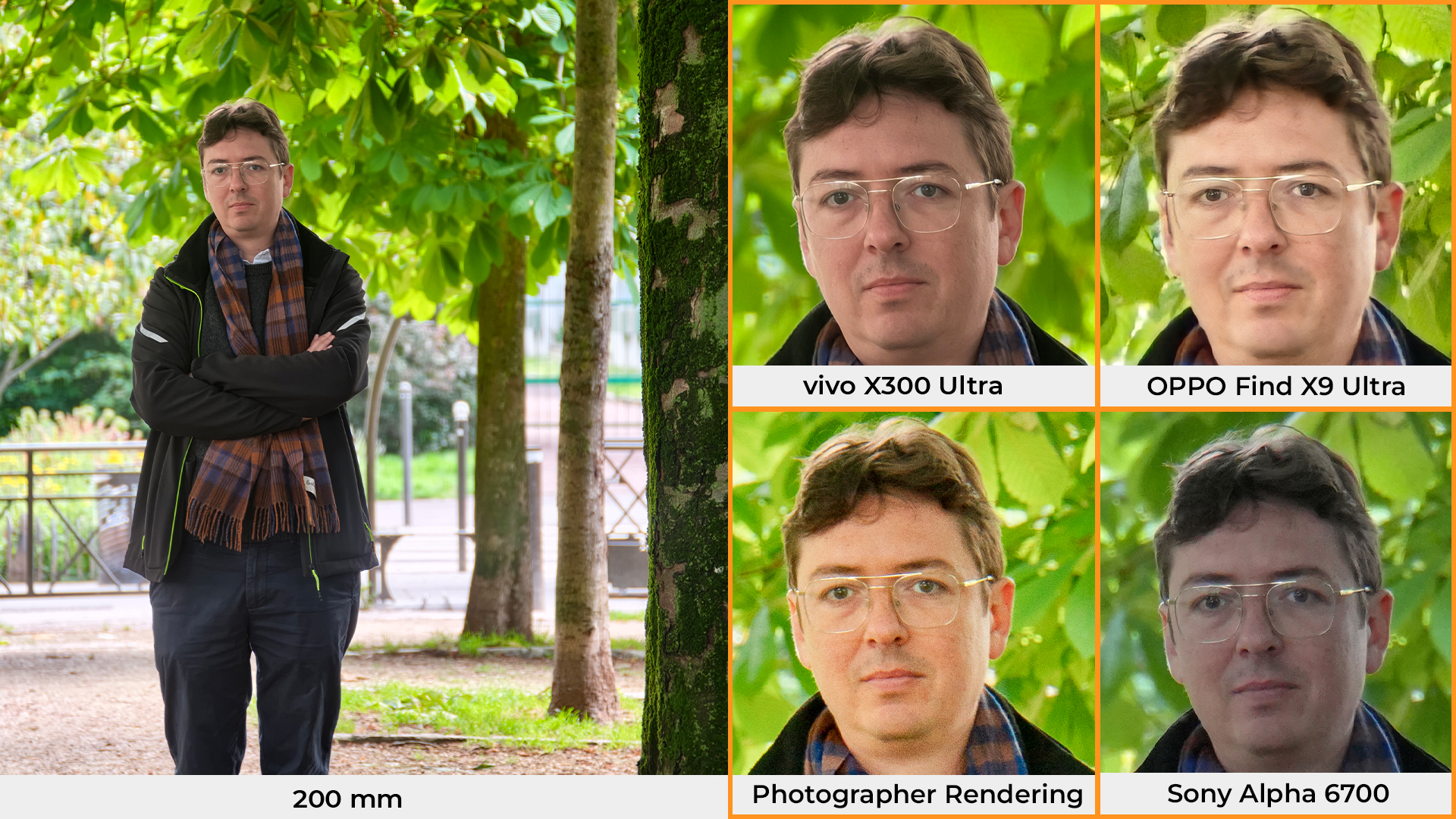
At 200mm, vivo becomes particularly competitive, with strong detail and good noise control. Outdoors, it delivers very good detail with good exposure and relatively clean images. Oppo keeps a high level of detail, although more noise can be seen. The photographer’s photo also provides a more natural-looking texture with some visible noise.
Indoors, vivo keeps particularly strong detail, while Oppo also produces good detail but can show a slight color shift. In low light, the difference between the two smartphones becomes more noticeable. Vivo keeps more detail while controlling noise effectively, while Oppo loses some small details and can show a slight color shift.
At night, vivo again keeps more detail while controlling noise effectively. Oppo shows more loss of small details and some visible image artifacts. The photographer’s photo remains more natural in texture and color, while the unedited Sony JPEGs show more visible noise in darker scenes.
Range – 300mm
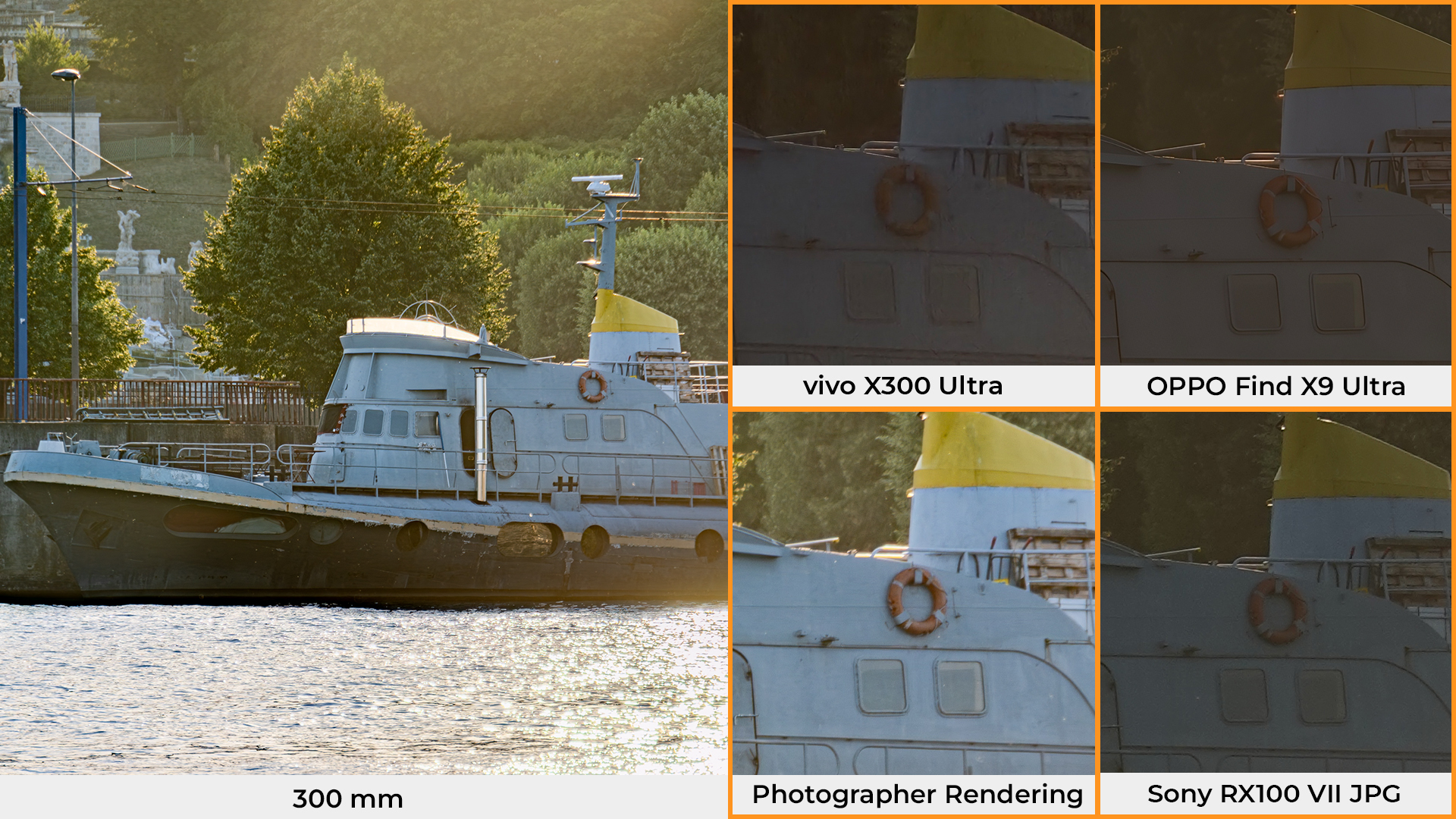
At 300mm, the smartphone add-ons become increasingly important. Outdoors, both Oppo and vivo capture a good level of fine detail. Vivo performs particularly well in HDR scenes, while Oppo delivers strong detail with accurate exposure. The photographer’s photo still has an advantage when recovering bright areas, producing natural-looking textures and displaying limited clipping under sunset conditions.
Indoors, both smartphones maintain good facial detail, although some details can start to look less natural. In low light, both Oppo and Vivo retain good detail with effective noise reduction, with Oppo performing slightly better in this case. This is where the benefits of the add-ons become particularly clear compared with the unedited camera JPEGs.
At night, both smartphones use their image processing to keep good levels of detail while controlling noise. Vivo can sometimes produce less natural-looking details and occasional changes in exposure or color, while Oppo provides a more consistent result. The photographer’s photo still looks more natural, although it does not always contain as much fine detail.
Range – 400mm
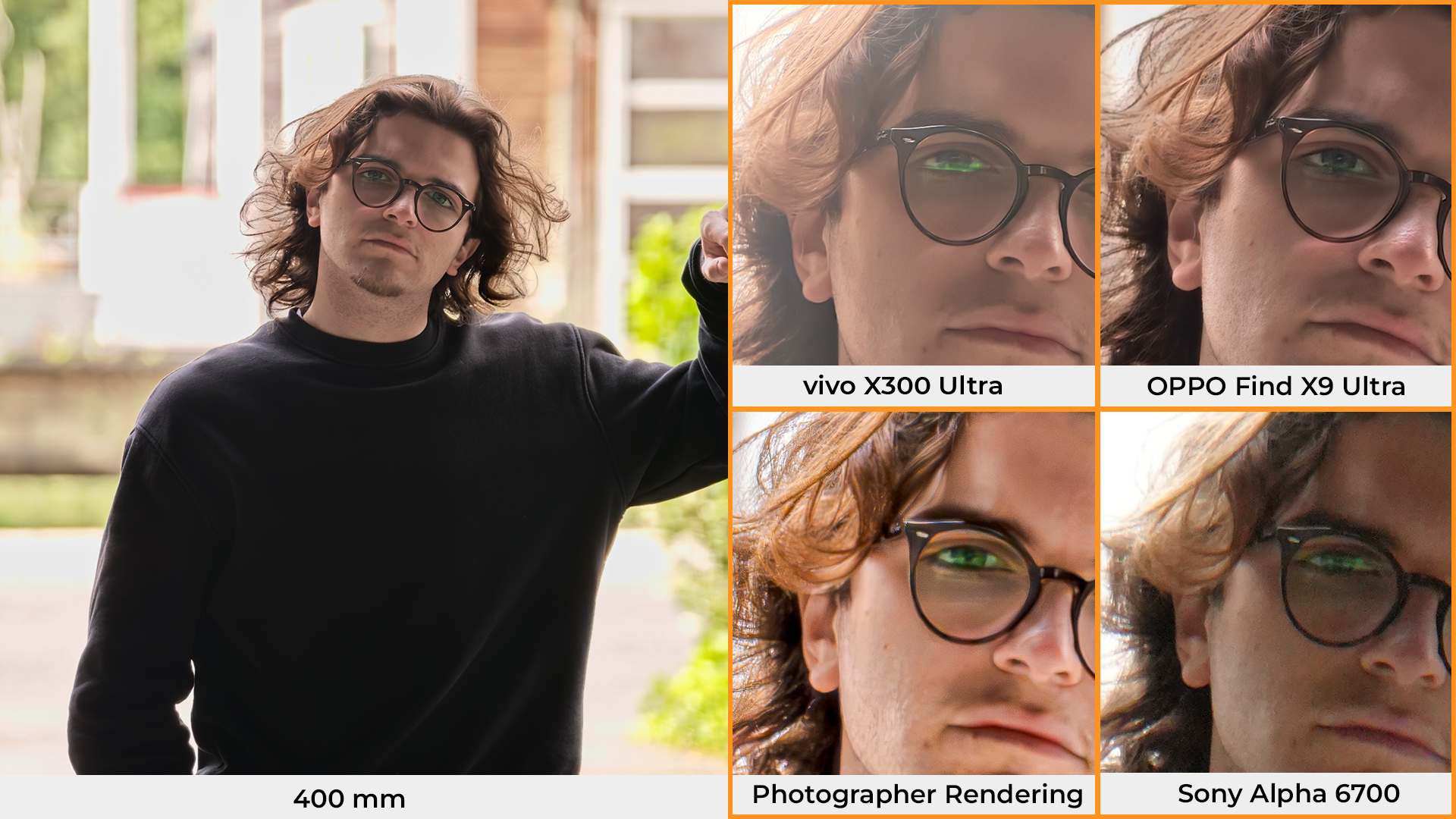
At 400mm, both smartphone add-ons remain highly competitive. Outdoors, vivo captures a high level of detail, particularly in portraits, although HDR scenes can sometimes look flatter and lose some color. Oppo also captures good detail and generally produces more natural colors. The photographer’s photo still has an advantage in texture and contrast.
Indoors, both systems keep a good amount of detail. Oppo produces natural-looking skin tones and colors, while vivo can make skin tones look slightly more saturated. In low light, both smartphones do a good job of reducing noise while keeping detail, although some details can start to look less natural.
At night, detail decreases across all systems. The smartphone add-ons continue to offer a good balance between detail and noise, while the photographer’s photo looks more natural and offers better image quality overall. Oppo and vivo can both show some processing artifacts or instability, but they keep noise under control better than the unedited camera JPEGs.
Range – 500mm
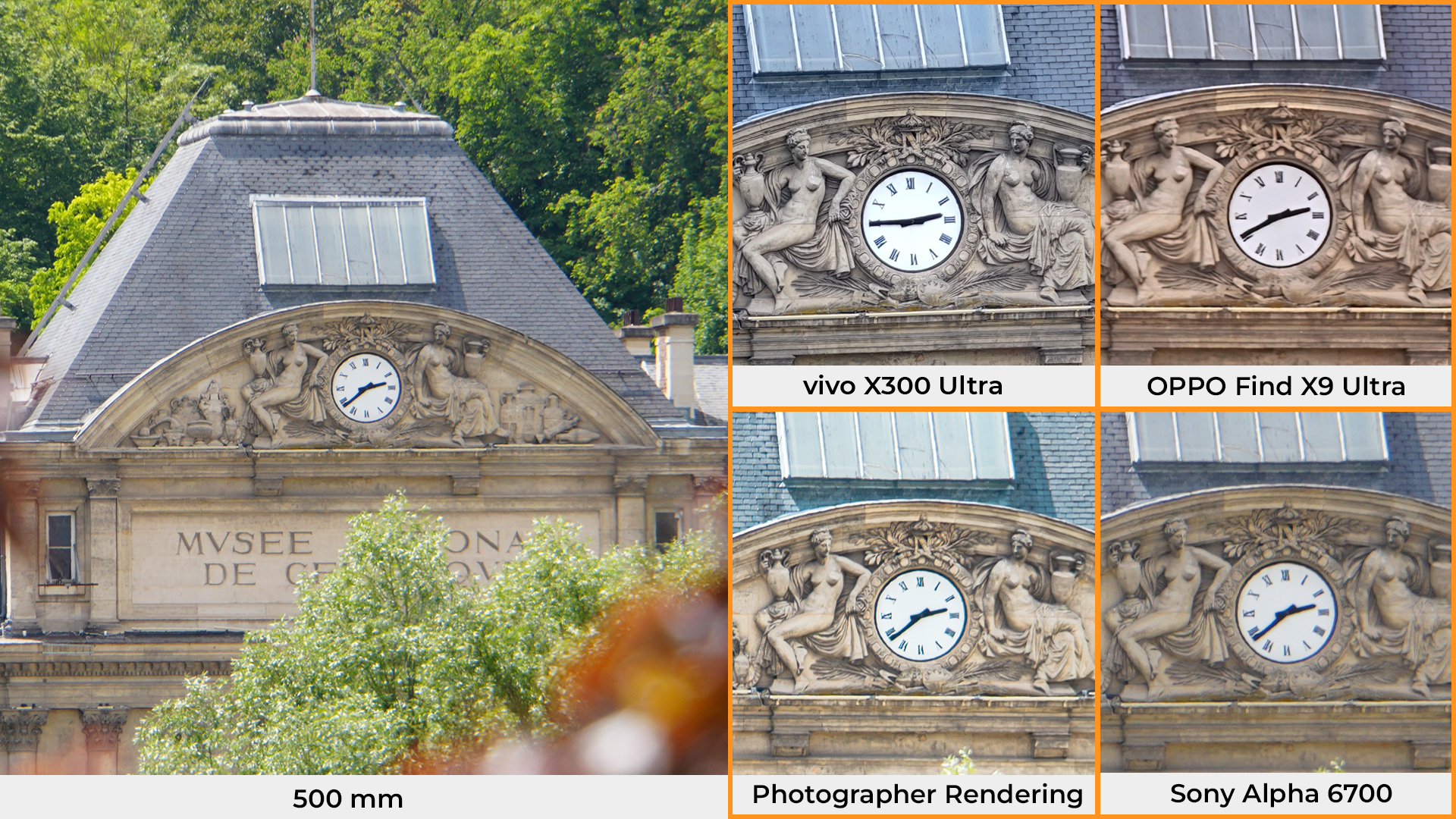
At 500mm, the smartphone add-ons become particularly competitive. Outdoors, vivo delivers very strong detail with little visible noise and fairly natural colors. Oppo also keeps a high level of detail, although its images can look more saturated. The photographer’s photo has a more natural texture but loses some detail because the 500mm view is created by cropping the 300mm image.
Indoors, vivo again provides the strongest detail, although autofocus can become less reliable in some situations. Oppo captures less detail but maintains a good balance between detail and noise. In low light, both smartphones benefit from effective noise reduction, although small details become less consistent as the light level drops.
At night, all systems lose some fine detail. Vivo can show an uneven level of detail, while Oppo and the photographer’s photo remain relatively close. The Sony cameras show more visible noise in these scenes, highlighting how effectively the smartphones process their images at this focal length.
User experience
The add-ons also change how the smartphone behaves when zooming. Once attached, the camera cannot shoot below the module’s minimum supported focal length, creating a break in the zoom range.

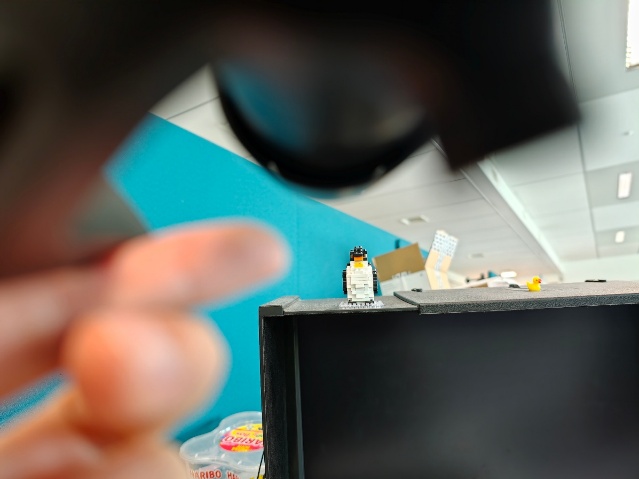
Example of the frame when switching to a shorter focal length on both Oppo and Vivo add-ons
Sony cameras offer a smoother experience through continuous optical zoom, followed by Clear Image Zoom or digital zoom. The preview also stays close to the final photo throughout the zoom range. On the smartphones, the preview and final image are generally well matched, with no major differences observed across the different focal lengths. Stabilization and subject tracking work well once the subject is locked, although a slight delay can sometimes be noticed when panning or switching between subjects.
Overall, the biggest difference is that smartphone add-ons create a hard limit at their minimum focal length, while Sony cameras offer a more continuous zoom experience.
Conclusion
The results show that telephoto add-ons can make a significant difference to smartphone photography at long distances. The photographer’s edited photos remain the strongest reference overall, particularly in terms of natural-looking detail, exposure, and highlight recovery. However, the gap becomes smaller as the zoom increases. At 135mm and 200mm, the photographer’s photos have a clearer advantage, while at 300mm and 400mm, the smartphone add-ons deliver strong detail and effective noise reduction. At 500mm, Oppo and Vivo can even produce cleaner and more detailed images than the unedited JPEGs from the reference cameras in some situations.
Although both smartphones perform well, their results reveal different characteristics. Vivo generally prioritises detail retention and noise reduction, producing particularly clean results in low-light and nighttime conditions. Its processing can sometimes be more aggressive, however, making fine details look less natural at very long distances, with occasional inconsistencies in exposure and colour. Oppo , on the other hand, delivers a more balanced rendering from 300mm onward, combining good detail retention, effective noise control and generally natural colours. While it can still introduce occasional colour shifts and AI reconstruction artefacts, its overall rendering is often more consistent, particularly when preserving the natural appearance of the scene. In other words, Vivo tends to favour cleaner images, while Oppo offers a more balanced approach to detail and rendering.
The Sony cameras still provide a smoother zoom experience and greater shooting flexibility, but their unedited JPEGs can show more noise and less detail in certain indoor and low-light conditions. This is where the smartphone add-ons become particularly interesting: in some situations, they can outperform straight-out-of-camera DSLR JPEGs, offering a level of detail and noise control that makes them a very compelling option for everyday photography without requiring additional editing.
Ultimately, these add-ons bring smartphone photography surprisingly close to larger camera systems when shooting at long distances. They provide extra optical reach, reduce the need to rely on digital zoom and, in some cases, deliver better results than unedited camera JPEGs. While they do not replace a professional camera combined with a carefully edited RAW workflow, they demonstrate how capable smartphone photography has become. The compromises, including a less continuous zoom experience and potential focusing limitations depending on the add-on, remain worth considering, but the overall results show that these solutions are much more than just an experimental accessory.